
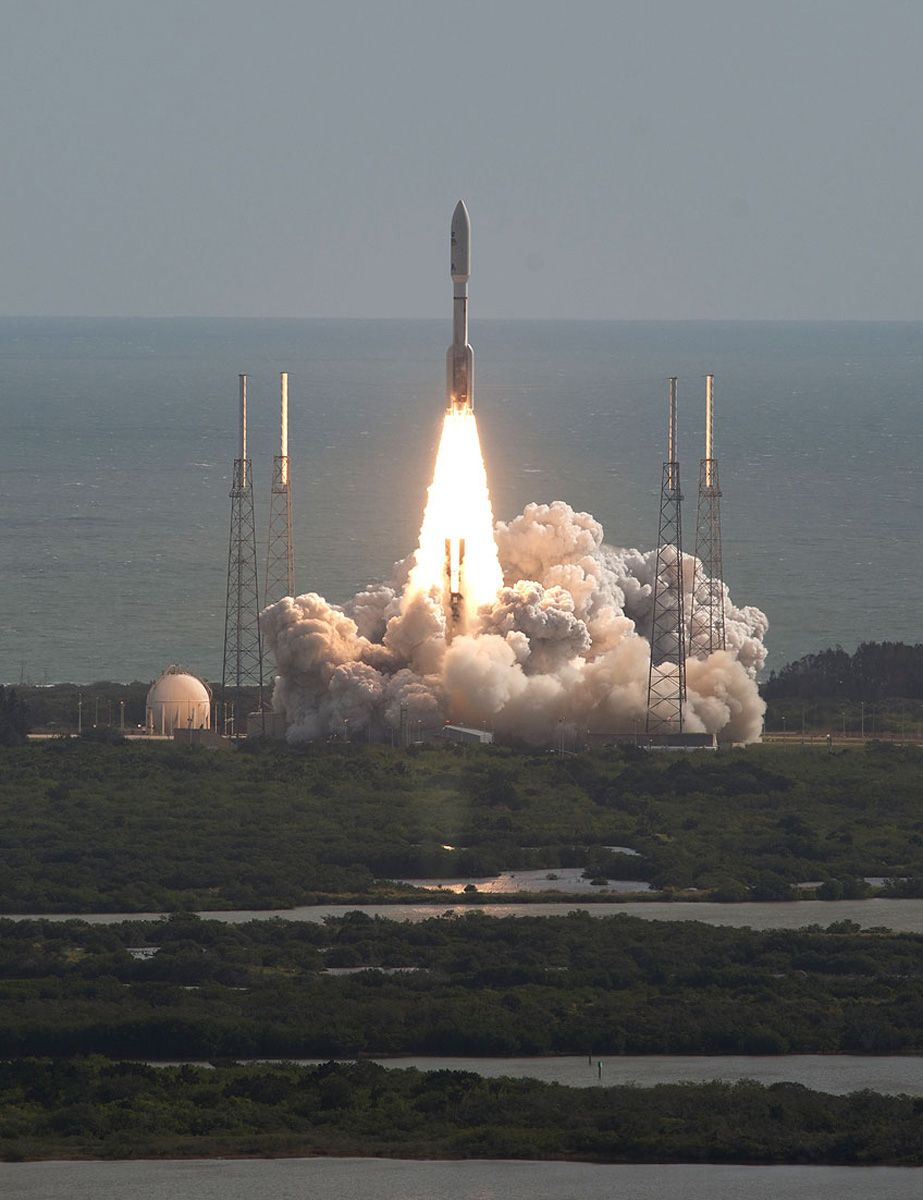
On November 26, 2011, the NASA Curiosity rover launched to Mars.
The Mars rover Curiosity was the biggest and most powerful rover anyone had ever sent to the Red Planet. The 2-ton science laboratory is about the size of a small SUV. The mission’s goal was to search for habitable environments on Mars, or evidence that the planet could have been habitable in the past.
It launched on an Atlas V rocket from Cape Canaveral Air Force Station in Florida. About nine months later, Curiosity made a challenging landing on Mars. It successfully used a new landing technology called a sky crane to gently lower it to the surface.
Why it mattered
It may be hard to imagine now, but 15 years ago, the idea of a nuclear-powered rover on Mars was just a concept. When the Curiosity rover launched in 2011, it made that idea a reality the car-size probe (using a plutonium-based radioisotope thermoelectric generator that converts heat from radioactive decay into power) as it headed to the Red Planet.
Curiosity was the largest rover ever launched to Mars, following up on the success of the tiny Sojourner rover in 1997 and the larger twin rovers Spirit and Opportunity in 2004. Its sky crane landing system was novel at the time, and fully automated. Once it began its descent in August 2012, NASA could only wait through “seven minutes of terror” to see how it turned out. It ended being a huge success.
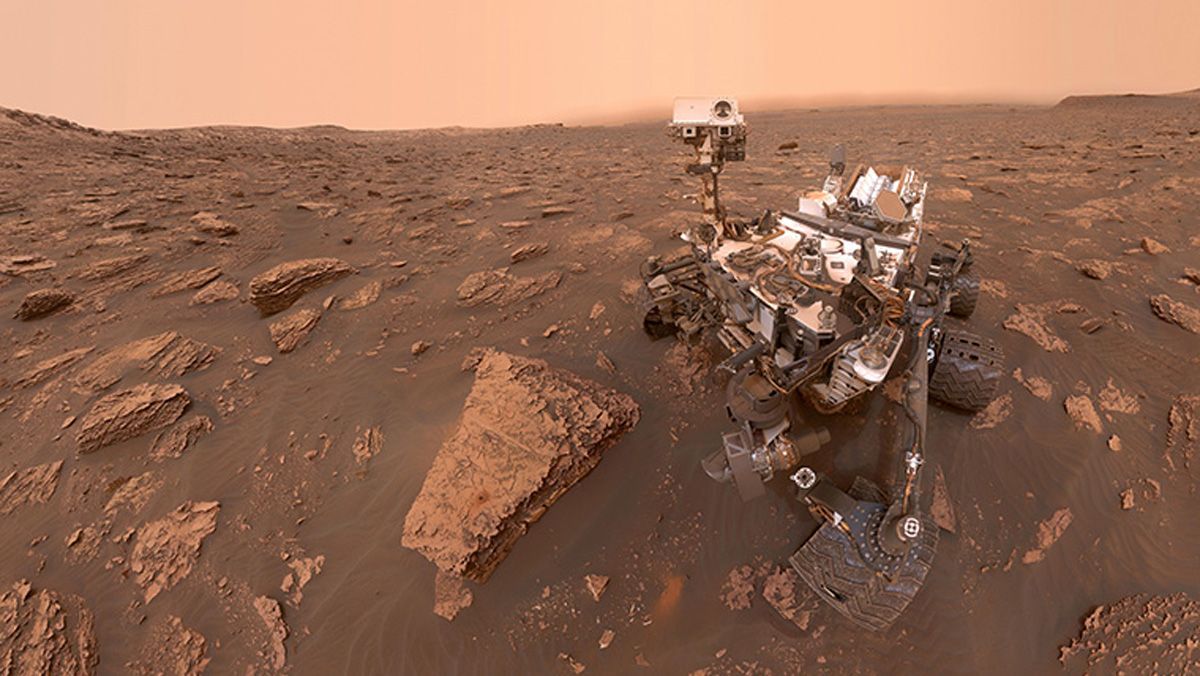
After its smooth landing, Curiosity lived up to its original name: the Mars Science Laboratory. Within weeks, Curiosity fulfilled its primary mission. It found evidence of ancient running water on Mars. It later found organic molecules on Mars as well.
Curiosity’s primary mission was expected to last just about one Martian year (687 Earth days, or about two Earth years), as the rover explored its Gale Crater landing site. But NASA has extended the mission as the rover continues to operate in good health.
In fact, Curiosity has survived long enough to welcome its successor to Mars, the Perseverance rover, which landed in February 2021 on a mission to collect the first samples for later retrieval. Perseverance used the same basic 2-ton design, plutonium power system and sky crane landing system to reach Mars.
And today, a ground-based twin of the Curiosity rover, called Promise, is being outfitted for an upcoming mission to the moon.
Want more space history? Check out our full On This Day In Space Story archive and watch our On This Day In Space videos on YouTube.